The best place for a tattoo depends on four factors: pain, visibility, available space and how the area ages. The arm and forearm tick almost all the boxes, which is why they top the list of popular choices. The ribs, the nape of the neck, the ankle and the hands each have their own advantages, but also their own considerations.
The only universal rule: avoid choosing where to get a tattoo on a whim at three in the morning. The lower back tattoos of the 2000s are watching you.
What factors should you consider when choosing a spot?
Pain
Not all areas of the body are equally tolerant of the needle. Fleshy areas, such as the outer arm, calf or thigh, are the most easily tolerated. Thin, bony or highly innervated areas, such as the ribs, hands, feet or spine, are the most sensitive. Our pain map provides details for each area.
Visibility
A tattoo on the forearm is visible as soon as you wear short sleeves. A design on the ribs or upper arm is only visible if you choose to show it. We’d love to tell you that this is no longer an issue, but some professional sectors remain wary of visible tattoos. We regret this; we’re fighting to change it, and we discuss this in our article on tattoos in the workplace. In the meantime, choosing an area that you can either show or cover up means you’re in control.
Ageing
An area that bends, rubs or is exposed to the sun ages more quickly than a stable, protected area. Very fine lines on a hand or foot wear out more quickly than those on a forearm. The sun, however, remains the enemy of all tattoos, regardless of where they are located.
Available space
A large design needs space to remain legible. The back, thigh and arm offer large areas, whilst the ankle or wrist naturally limit the size. And size has a direct impact on the cost, as explained in our guide to tattoo prices.
Comparison table of the main areas
| Area | Pain | Visibility | Ageing | Ideal for |
|---|---|---|---|---|
| Outer forearm | Low | High | Very good | First tattoo, medium-sized designs |
| Upper arm, shoulder | Low | Flexible | Very good | Modular pieces, cuffs |
| Calf | Low | Flexible | Very good | Medium to large designs |
| Thigh | Low to medium | Low | Very good | Large designs |
| Back | Average | Low | Very good | Large designs |
| Nape of the neck | Medium to high | Flexible | Good | Small graphic designs |
| Wrist | High | High | Good | Small designs, wristbands |
| Ankle | High | Flexible | Well, it’s healed up nicely | Small, discreet designs |
| Ribs | Very high | Low | Good | Designs that follow the contours of the body |
| Hands, fingers | Very high | Permanent | More fragile | Well-thought-out projects |
The arm and forearm: why are they the most popular places to get a tattoo?
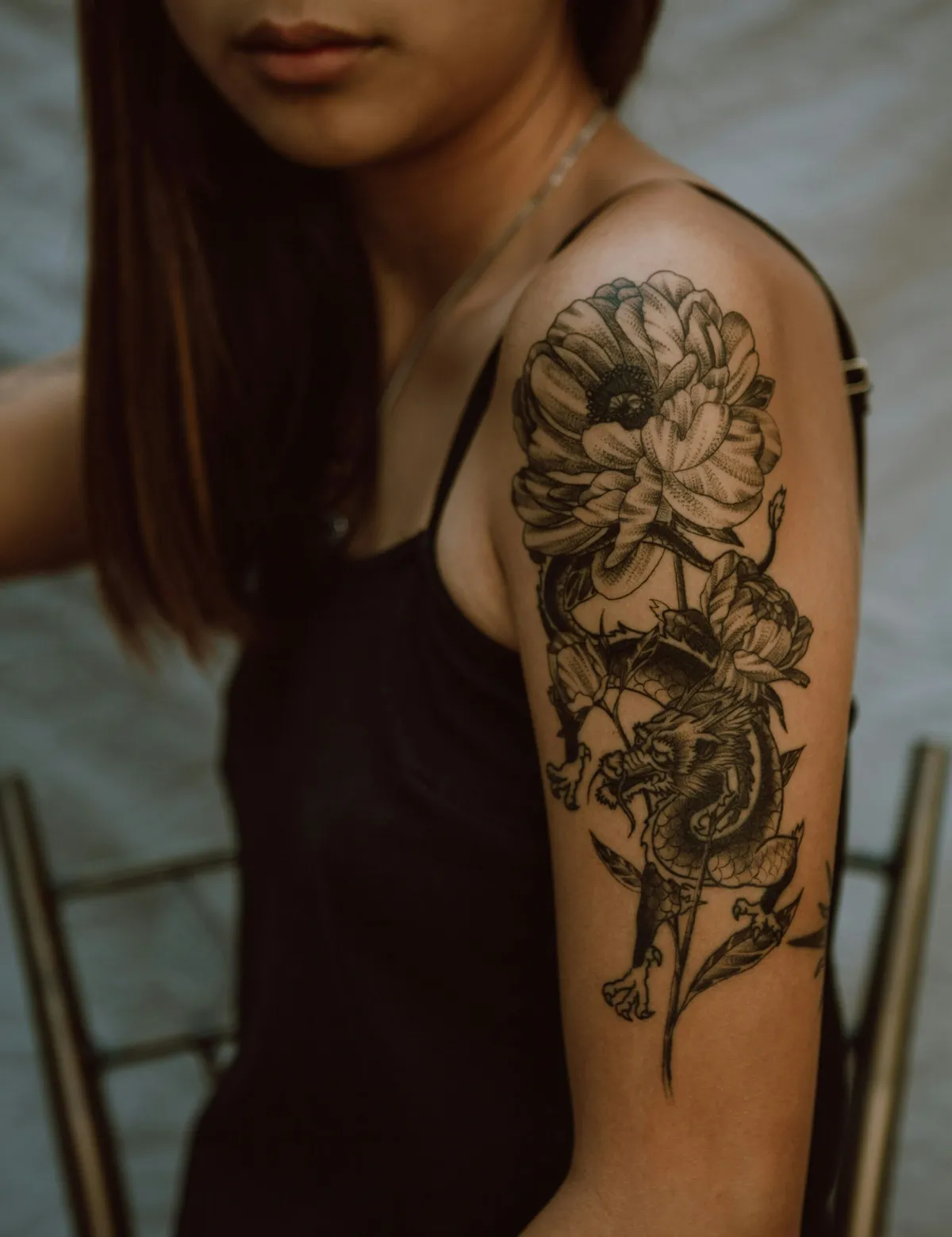
Because it offers almost every advantage. The pain is quite bearable, the surface area allows for designs of all sizes, and the visibility can be adjusted with a sleeve. It’s also the prime spot for cuff tattoos, those designs that are built up over several years.
The outside of the forearm is the most comfortable: the skin is thicker and less innervated. The inside, which is thinner, is a little more sensitive, but this is often where people choose to have more personal designs, a first name, a date or a small symbol that they keep to themselves.
Think ahead. A single design on the upper arm that eventually extends down towards the elbow is a classic choice. Let the tattoo artist know this at your very first session: they’ll leave enough space and position the design so that it can grow.
The ankle: discreet, but one to treat with care
The ankle is perfect for a small, discreet design. The skin there is thin, and the area is more sensitive than you might think, especially on the bone and near the Achilles tendon, whereas the calf just above it is much more comfortable.
The real issue is healing. Socks and shoes rub against the tattoo all day long, and the French National Health Service advises against wearing clothes that rub against the tattoo until it has healed. Make sure you wear loose-fitting shoes for three to four weeks, and save your festival trainers for later. Our week-by-week healing guide details each stage.
The coast: magnificent, but challenging
Few areas are as well-suited to a design that follows the curves of the body. Floral or organic designs look superb here. On the other hand, it is one of the most painful areas: the skin is thin, there is bone just underneath, and breathing causes everything to shift.
Getting a tattoo on your ribs requires some preparation: a session that isn’t too long, planned breaks, a good meal beforehand, and a decent night’s sleep. And if it’s your first tattoo, you might want to start somewhere else, to test your tolerance on a less sensitive area.
The nape of the neck: visible only when you choose to be
The nape of the neck is ideal for a small graphic design: a symbol, a short word, a fine line. It’s hidden by your hair or a collar, but revealed when you wear your hair in a bun. The skin is more sensitive near the spine, and during the session you’ll need to keep your head down and still.
A little word of warning: you’ll never see your tattoo without a mirror. Check the stencil from every angle before the needle starts. A design that’s crooked on the nape of your neck is one that everyone else can see, except you.
The shoulder and back: the ideal spots for large designs
The shoulder offers a good compromise: hidden under a T-shirt, visible in a vest top. The pain is fairly tolerable there, though a little sharper on the collarbone and shoulder blade. The back, meanwhile, offers the largest surface area on the body, perfect for large symmetrical designs or Japanese-style pieces. The only drawback is that to admire your back, you’ll always need two mirrors or a friend.
Calves, thighs, hips: the underrated areas
We often think of the arms first, and forget about the legs. Yet they offer advantages that few other areas can match.
The calf is one of the most comfortable places on the body, with a good thickness of muscle. Its elongated shape lends itself to vertical designs, animals, flowers and Japanese-style compositions. It can be hidden under trousers or shown off in shorts: adjustable visibility guaranteed.
The thigh offers a large, fairly flat surface, perfect for a detailed piece or a realistic design that needs space. The outer thigh is well tolerated, whilst the inner thigh is much more sensitive. It’s also an area that isn’t often on show in everyday life, making it ideal if you want a large tattoo without it being on display every day.
The hip is a great spot for floral and organic designs, which follow its curve. As the skin is more sensitive over the bone, care must be taken with belts and high-waisted jeans whilst the tattoo is healing.
Another advantage of the legs is that they age well, are exposed to less sun than the arms on a day-to-day basis, and leave room for future designs.
The wrist and hands: areas in a league of their own
The wrist is appealing because it is discreet and symbolic. The skin there is thin and close to the bone, so it is more sensitive than the forearm. It lends itself well to small designs, such as a tattooed bracelet.
The hands are a special case. With a high concentration of nerves, skin that’s constantly under strain, repeated washing and constant rubbing, fine details wear away more quickly here, and the healing process requires a great deal of care. It’s also an area that’s constantly on display. A tattoo on the hands takes longer to decide on than others, and many tattoo artists prefer to reserve it for people who already have tattoos elsewhere.
How do you match the area and the style?
The placement and style are chosen together. A geometric or dotwork design looks best on a fairly flat surface, such as the forearm or calf. A floral or watercolour design naturally follows the curves of the ribs, hip or shoulder. An irezumi requires large, sweeping areas. Our overview of tattoo styles helps you balance these two choices.
Should you avoid getting tattoos over moles?
This is a point that is often overlooked. The French National Health Service (Assurance Maladie) points out that monitoring moles hidden beneath a tattoo can be difficult, and advises against getting a tattoo for people with a very large number of atypical moles. If you have a lot of freckles, it recommends seeking medical advice. If the chosen area contains a mole, mention this to the tattoo artist: most will be happy to work around it.
Should you consider how different tattoos will look together?
After two or three tattoos, the question almost always comes up. There are two approaches: creating a continuous piece that links several areas, such as a sleeve from the shoulder to the wrist, or embracing a collection of independent designs, much like a travel journal. Neither is better than the other. What matters is making a conscious choice rather than leaving it to chance. Discuss this with your tattoo artist before your second tattoo: that’s the right time to do so.
Find out more
- How to choose your first tattoo (and get it right)
- Tattoos: which areas hurt the most?
- The cost of a tattoo in France: a budget guide
The perfect spot is one you’ll always want to look at, or show off. To find a certified tattoo artist near you and discuss your ideas with them before booking, download Tat’s It, the 100 per cent free app: the links are just below.
An idea, a tattoo, Tat’s It.